
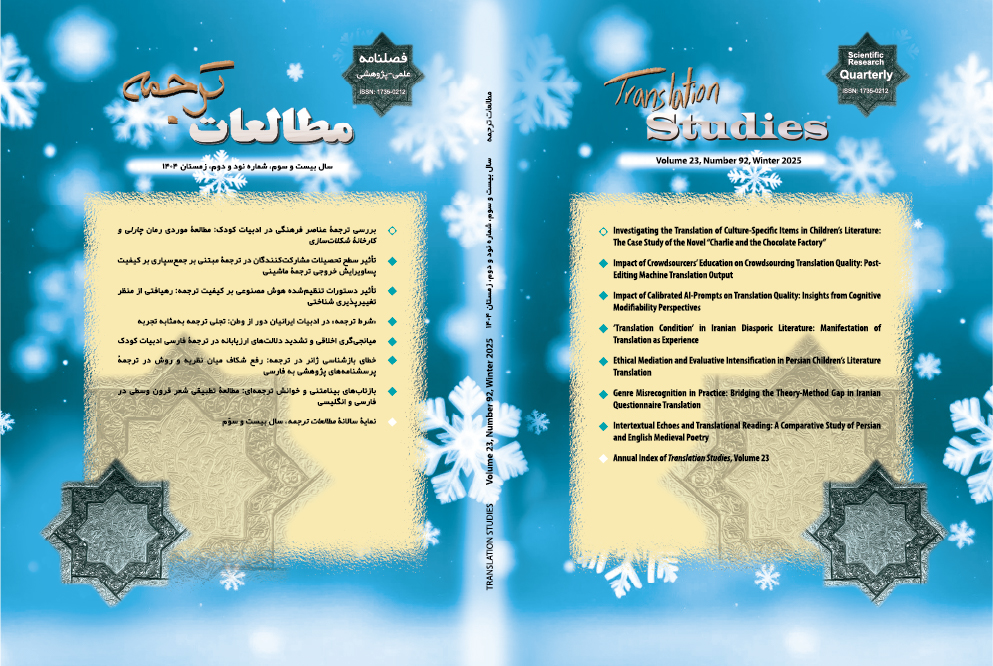
میانجیگری اخلاقی و تشدید دلالتهای ارزیابانه در ترجمۀ فارسی ادبیات کودک
چکیده
ترجمۀ ادبیات کودک غالباً در بستری انجام میشود که در آن انتظارهای آموزشی و هنجارهای فرهنگی نقشی پررنگ دارند. با این حال، هنوز بهروشنی مشخص نیست که جهتگیری اخلاقی روایتها چگونه از رهگذر انتخابهای ظریف زبانی در فرایند ترجمه شکل میگیرد. پژوهش حاضر با بررسی نقش عاملیت مترجم در شکلدهی به این جهتگیری، ترجمۀ فارسی کتاب هدیه لحافدوز اثر جف برامبو (۲۰۰۰) با ترجمه فریدون فریاد (۱۳۸۳) را مطالعه میکند و نشان میدهد که این عاملیت میتواند در قالب نوعی میانجیگری اخلاقی نمود یابد. چارچوب نظری پژوهش بر پایه «نظریه ارزیابی» در زبانشناسی نقشگرا و رویکرد «اخلاق فضیلتمحور» در مطالعات ترجمه شکل گرفته است. بر این اساس، بخشهایی از متن مبدأ و متن مقصد با رویکردی کیفی و مقایسهای تحلیل شدهاند تا دگرگونیهای ارزیابانه و ارزشگذار در ترجمه شناسایی شوند. یافتهها نشان میدهد که ترجمۀ فارسی از مجموعهای از راهبردهای تکرارشونده برای برجستهسازی بُعد اخلاقی روایت بهره میگیرد. این راهبردها شامل نمایشیسازی عاطفه، درونیسازی هیجان، بزرگنمایی حسی، شفقتآفرینی واژگانی و بسط کیهانی است. بهکارگیری این الگوها موجب برجستگی بیشتر نشانههای اخلاقی و عاطفی در متن فارسی شده است. در نتیجه، بیآنکه ساختار کلی روایت دستخوش تغییر شود، منابع ارزیابانه مرتبط با عاطفه، داوری و قدردانی در متن مقصد تقویت شدهاند. از این منظر، میتوان چنین تغییرات خُرد زبانی را مصداقی از میانجیگری اخلاقی دانست؛ فرایندی که روایت را با الگوهای اخلاقیِ حاکم بر فرهنگ مقصد همسو میسازد. این پژوهش با ارائه چارچوبی تحلیلی برای مشاهده این دگرگونیها، به گسترش بحثهای مربوط به اخلاق در ترجمه کمک میکند و نشان میدهد که بومیسازی در ترجمۀ ادبیات کودک ممکن است نه از طریق بازنویسی آشکار ایدئولوژیک، بلکه از رهگذر تغییرات ظریف در زبان ارزیابانه تحقق یابد.
کلمات راهنما:
ترجمۀ ادبیات کودک، تشدید دلالتهای ارزیابانه، عاملیت مترجم، میانجیگری اخلاقی، نظریۀ ارزیابی، نمایهگذاری اخلاقیمراجع
Alvstad, C. (2019). Children’s literature. In K. Washbourne & B. Van Wyke (Eds.), The Routledge handbook of literary translation (pp. 159–180). Routledge.
Arzuk, D. (2013). Creating a nation from scratch: Nationalism and nationhood in Çocuk children’s periodical in Turkey, 1936–39. In N. Maguire & B. Rodgers (Eds.), Children’s literature on the move: Nations, translations, migrations (pp. 205–217). Four Courts Press.
Baleghizadeh, S., & Ranjour, F. (2010). Manipulation in translation of children’s literature. Iranian Journal of Translation Studies, 8(29), 9–30.
Bixler, P. (1981). Moral tales and the development of children’s literature. Children’s Literature, 9, 1–14.
Brumbeau, J. (2000). The quiltmaker’s gift. Scholastic Press.
Brumbeau, J. (1383/2004). Hediye-ye khuban [The gift of the virtuous] (F. Faryad, Trans.; 13th ed.). Kanoon-e Parvaresh-e Fekri-ye Koodakan va Nojavanan. (Original work published 2000).
Chesterman, A. (2016). Memes of translation (Rev. ed.). John Benjamins.
Chesterman, A. (2020). Virtue ethics in translation. In K. Koskinen & N. K. Pokorn (Eds.), The Routledge handbook of translation and ethics (pp. 13–24). Routledge.
Dybiec-Gajer, J. (2020). Mixing moralizing with enfreakment: Polish-language rewritings of Heinrich Hoffmann’s classic Struwwelpeter (1845). In A. Kérchy & B. Sundmark (Eds.), Translating and transmediating children’s literature (pp. 71–86). Palgrave Macmillan.
Gasser, L., Malti, T., & Buholzer, A. (2022). Children’s moral development through narrative fiction: A review. Journal of Moral Education, 51(2), 143–158.
Ghazanfari Moghaddam, N., Hashemi, M. R., & Ghorban Sabbagh, M. R. (2021). Investigating the effect of powerful institutions on Iranian children’s literature award-winners before and after the Islamic revolution (1961–1988). Iranian Children’s Literature Studies, 11(2), 79–100.
Lambert, J. (2023). Translation ethics. Routledge.
Lathey, G. (2006). The translator revealed: Didacticism, cultural mediation and visions of the child reader in translators’ prefaces. In J. Van Coillie & W. P. Verschueren (Eds.), Children’s literature in translation: Challenges and strategies (pp. 1–19). Routledge.
Lathey, G. (2010). The role of translators in children’s literature: Invisible storytellers. Routledge.
Leonardi, V. (2020). Ideological manipulation of children’s literature through translation and rewriting: Travelling across times and places. Palgrave Macmillan.
Martin, J. R., & White, P. R. R. (2005). The language of evaluation: Appraisal in English. Palgrave Macmillan.
Nodelman, P. (2008). The hidden adult: Defining children’s literature. Johns Hopkins University Press.
Oittinen, R. (2006). No innocent act: On the ethics of translating for children. In J. Van Coillie & W. P. Verschueren (Eds.), Children’s literature in translation: Challenges and strategies (pp. 35–46). Routledge.
Rottman, J., Gentner, D., & Goldwater, M. (2017). Causal learning and moral development. Cognitive Science, 41(3), 784–813.
Shavit, Z. (1986). Poetics of children’s literature. University of Georgia Press.
Vahhabzadeh, K. (2018). Strategies of censorship in translating children’s stories from English into Persian. Translation Studies, 15(60), 95–123.
Wunderlich, R. (1992). The tribulations of Pinocchio: How social change can wreck a good story. Poetics Today, 13(1), 197–219.
Downloads
چاپشده
ارجاع به مقاله
شماره
نوع مقاله
DOR
مجوز
حق نشر 2026 Mahdi Vahedikia

این پروژه تحت مجوز بین المللی Creative Commons Attribution-NonCommercial 4.0 می باشد.
Copyright Licensee: Iranian Journal of Translation Studies. This article is an open access article distributed under the terms and conditions of the Creative Commons Attribution–NonCommercial 4.0 International (CC BY-NC 4.0 license).