
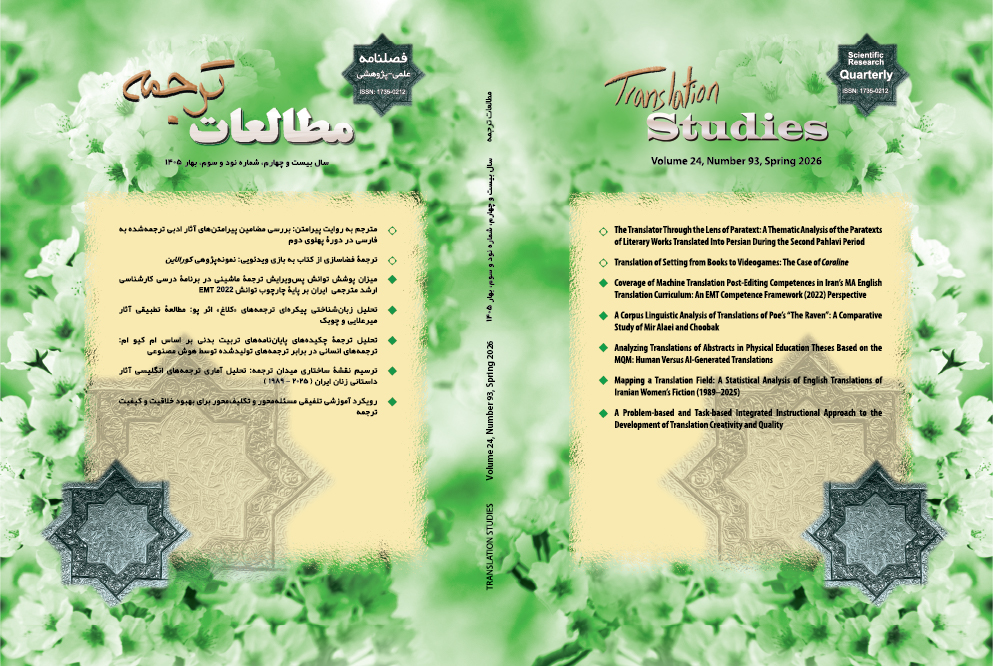
ترسیم نقشۀ ساختاری میدان ترجمه:
تحلیل آماری ترجمه¬های انگلیسی آثار داستانی زنان ایران (2025-1989)
چکیده
بیش از سی سال است که خوانندگان انگلیسیزبان از طریق ترجمه با آثار داستانی زنان ایرانی آشنا شدهاند؛ با این حال، هیچ پژوهشی میدان ساختاری این ادبیات را ترسیم نکردهاست. اهمیت این شکاف در بررسی این امر است که آیا صدای زنان ایرانی بر اساس اینکه چه کسی این آثار را برای خوانندگان انگلیسی انتخاب، منتشر و ارائه میکند، به شناخت بینالمللی دست مییابد یا خیر. این پژوهش با بهرهگیری از جامعهشناسی بوردیو و نظریه پیرامتن بچلر، به بررسی این مسئله میپردازد که چگونه نوع ناشر، وضعیت تبعید نویسنده و ویژگیهایی پیرامتنی، مواضع و موضعگیریهای این میدان را شکل میدهند. این مطالعه از آزمونهای استنباطی ناپارامتری، جدولبندی متقاطع و آمار توصیفی برای بررسی سه مجموعه داده کتابشناسی مرتبط استفاده میکند. بر اساس دادهها، تنها ۷ کتاب از ۵۶ کتاب را ناشران دانشگاهی منتشر کرده اند و نوع ناشر پیشبینیکننده تعداد پیرامتنها، وضعیت تبعید نویسنده یا وضعیت انتشار اثر در ایران نیست. در مقابل، میدان مبدأ نقشی حیاتی ایفا میکند، چرا که ۹۷٫۹٪ از آثار نویسندگان خودتبعیدشده در ایران نایاب یا ممنوعالچاپ هستند. همچنین وضعیت تبعید با دریافت کمتر جوایز فارسی در سطح کتاب ارتباط دارد، اما این ارتباط در سطح نویسنده معنادار نیست. پرستیژ نیز در زبانهای فارسی و انگلیسی مستقل از یکدیگر عمل میکند. در میدان مقصد، عاملیت به جای اعتبار افراد، از طریق پیرامتن توزیع میشود و مترجمان در تازهترین دوره (۲۰۲۵–۲۰۱۶) با ۴۸٫۲٪ پیشتاز هستند، در حالی که ناشران کنترل ۴۴٫۶٪ پیرامتنها و ۹۱٫۴٪ از زندگینامهها را در دست دارند. در نهایت نتیجهگیری شد که این ادبیات پیرامونیِ تحت کنترل دولت ایران، در درجه اول در میدان مبدأ و نه در میدان مقصد انگلیسیزبان هدایت میشود.
مراجع
Batchelor, K. (2018). Translation and paratexts. Routledge.
Bolouri, M. (2018). Translators’ agency in footnotes and notes of contemporary Iranian literary translators. Language Related Research, 8(6). http://lrr.modares.ac.ir/article-14-6415-en.html
Bolouri, M., & Rezvani, E. (2023). The politics of translation: Investigating paratexts of persian translations of American literary works in two ishtorical contexts. Iranian Journal of Translation Studies, 21(82), 61–78. https://journal.translationstudies.ir/ts/article/view/1099
Bourdieu, P. (1986). The forms of capital. In J. G. Richardson (Ed.), Handbook of theory and research for the sociology of education (pp. 241–258). Greenwood Press.
Bourdieu, P. (1990). In other words: Essays toward a reflexive sociology. Polity Press.
Bourdieu, P. (1993). The field of cultural production: Essays on art and literature (R. Johnson, Ed.). Columbia University Press.
Bourdieu, P. (1996). The rules of art: Genesis and structure of the literary field (S. Emanuel, Trans.). Stanford University Press.
Damrosch, D. (2003). What is world literature? Princeton University Press.
Gharehgozlou, F. (2018). Paratextual analysis of English translations of contemporary Iranian women’s fiction [Unpublished doctoral dissertation]. University of Tehran.
Heilbron, J., & Sapiro, G. (2007). Outline for a sociology of translation. In M. Wolf & A. Fukari (Eds.), Constructing a sociology of translation (pp. 93–107). John Benjamins.
Hosseinzadeh, M. (2018). A Narrative account on the translatorial prefaces to the fictions translated into Persian. Language and Translation Studies (LTS), 50(4), 140–167. https://doi.org/10.22067/LTS.V50I4.67972
Inghilleri, M. (2005). Mediating zones of uncertainty: Interpreter agency, the interpreting habitus and political asylum adjudication. The Translator, 11(1), 69–85. https://doi.org/10.1080/13556509.2005.10799190
Jiang, B. (2020). Women in translation: Gender and (in)visibility in the Anglophone literary market. Perspectives, 28(1), 34–49. https://doi.org/10.1080/0907676X.2019.1614144
Moslehi, Z. (2024). Thematic analysis of paratextual materials in English translations of Iranian women’s fiction. Translation Studies Quarterly, 22(85), 45–63.
Nanquette, L. (2021). Iranian literature after the Islamic Revolution: Production and circulation in Iran and the world. Edinburgh University Press.
Quay, M. (2022). Gender and canonization in contemporary Persian short story anthologies, 1980 to 2020. In P. Shabani-Jadidi, P. J. Higgins (Eds.), The Routledge handbook of Persian literary translation (pp. 200–228). Routledge.
R Core Team. (2026). R: A language and environment for statistical computing. R Foundation for Statistical Computing, https://www.R-project.org/
Saldanha, G., & O’Brien, S. (2014). Research methodologies in translation studies. Routledge.
Wolf, M., & Fukari, A. (Eds.). (2007). Constructing a sociology of translation. John Benjamins.
Yalsharzeh, R., Barati, H., & Hesabi, A. (2019). Dissenting voices: When paratexts clash with texts. paratextual intervention in persian translations of texts relating to the iran-iraq war. Meta (Canada), 64(1), 103–124. https://doi.org/10.7202/1065330AR
Zanjanbar, A. H., Moradi, A., & Ameri Feleihi, N. (2022). A Comparison Between the Persian Translations of the Children’s Story. Journal of Foreign Language Research, 12(3), 308–327.
Downloads
چاپشده
ارجاع به مقاله
شماره
نوع مقاله
DOR
مجوز
حق نشر 2026 Mina Zandrahimi, Farzaneh Farahzad

این پروژه تحت مجوز بین المللی Creative Commons Attribution-NonCommercial 4.0 می باشد.
Copyright Licensee: Iranian Journal of Translation Studies. This article is an open access article distributed under the terms and conditions of the Creative Commons Attribution–NonCommercial 4.0 International (CC BY-NC 4.0 license).